


→ Want to bypass Google Play entirely? See how ROiBest PWA works — no submission, no cut, 1.2x installs.
Meta Digital Services Tax Surcharges: What Changed in 2026
In early 2026, Meta announced a significant policy change that sent shockwaves through the cross-border advertising community. The company began applying Digital Services Tax (DST) surcharges to advertisers operating in multiple countries, including key markets across Europe, Southeast Asia, and Latin America. These surcharges range from 2% to 5% depending on the jurisdiction, and they apply directly on top of your existing ad spend.
For teams running Android app install campaigns at scale, this is not a minor line item. If you are spending $100,000 per month on Meta ads across affected markets, you are now looking at an additional $2,000 to $5,000 in unavoidable tax pass-through costs every single month. Over a year, that compounds into $24,000 to $60,000 in additional acquisition costs with zero additional installs to show for it.
The affected countries include France, Spain, Italy, Austria, the United Kingdom, Turkey, Kenya, Nigeria, Indonesia, and several others. Meta has been transparent that these costs are being passed directly to advertisers rather than absorbed by the platform. For businesses distributing Android apps in these markets, the timing could not be worse — competition for installs is already fierce, and CPMs have been trending upward since late 2025.
The Double Tax Problem: Meta Surcharges Plus Google Play Commission
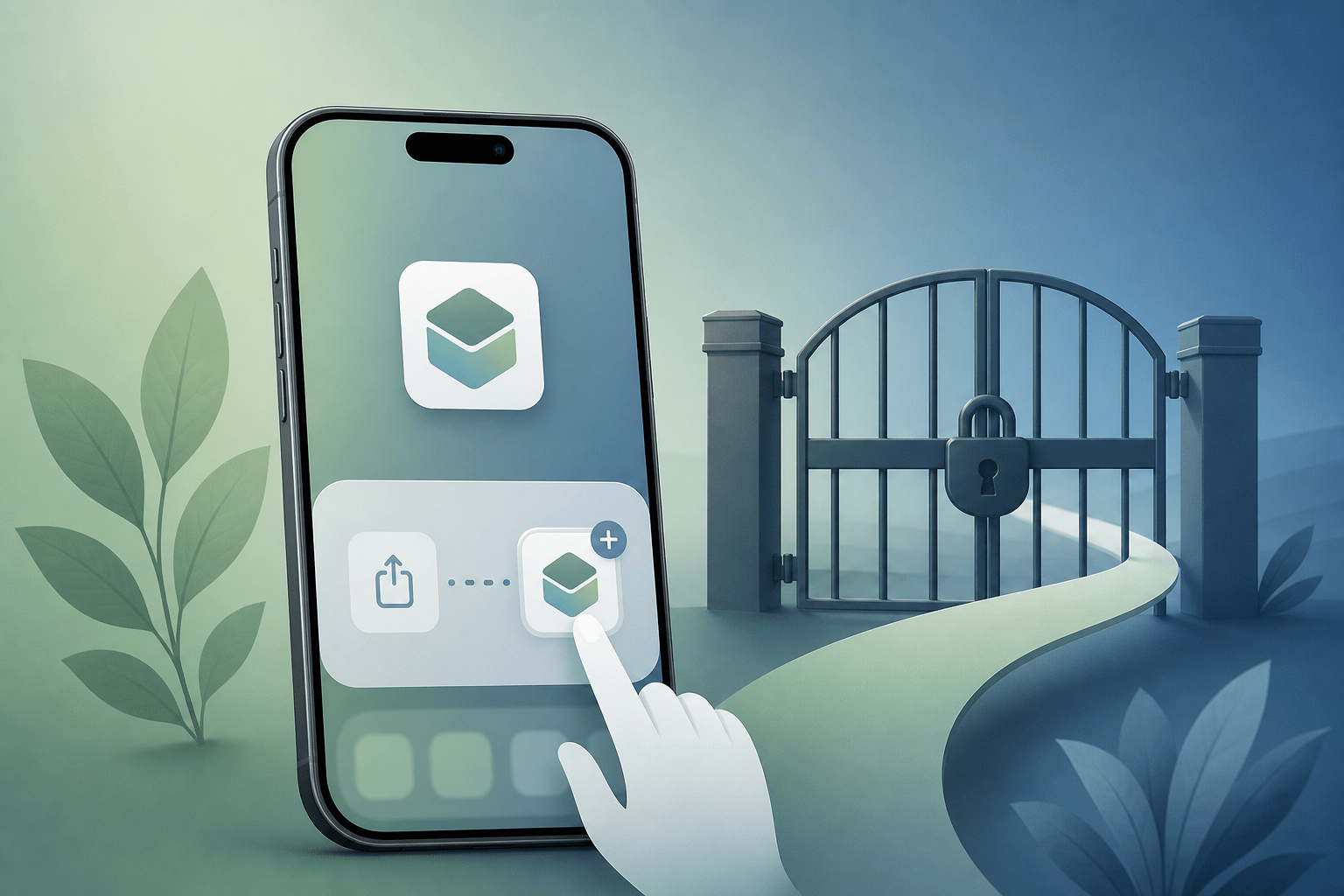
Here is where the math gets truly painful for Android app distribution teams. The Meta DST surcharge is not your only rising cost. If you are distributing through Google Play, you are already paying a 30% commission on every in-app transaction. When you stack these two costs together, the economics of user acquisition become extremely challenging.
Let us walk through a concrete scenario. Suppose your average cost per install (CPI) from Meta ads is $2.50, and your average revenue per user (ARPU) over the first 90 days is $8.00. Under the old model, Google Play takes 30% of that $8.00, leaving you with $5.60 in net revenue. Your ROI was $5.60 minus $2.50, giving you $3.10 in profit per user.
Now factor in the DST surcharge. Your effective CPI rises by 2-5%, making it $2.55 to $2.63. Meanwhile, Google Play still takes its 30% cut regardless. Your profit per user drops to somewhere between $2.97 and $3.05. That might sound like small change, but at scale — say 100,000 installs per month — you are losing $5,000 to $13,000 in monthly profit. Over a year, that is $60,000 to $156,000 evaporating from your bottom line.
The fundamental issue is that you are being taxed twice on the same user journey. First, Meta charges you more to acquire the user. Then, Google charges you 30% of every dollar that user generates. These two costs compound against each other, creating a squeeze that gets worse as you scale.
Why Android PWA Distribution Eliminates the 30% Problem
Android Progressive Web App (PWA) distribution offers a structural solution to this cost squeeze. When you distribute your app as a PWA instead of through Google Play, you completely eliminate the 30% platform commission. There is no intermediary taking a cut of your revenue. Every dollar your users spend goes directly to you.
This is not a marginal optimization. This is a 30% improvement in your revenue retention on every single transaction. When Meta ad costs are rising due to DST surcharges, having 30% more revenue per user gives you a massive buffer to absorb those increases without sacrificing profitability.
Let us revisit our earlier scenario. With PWA distribution through ROiBest, your $8.00 ARPU remains $8.00 — no 30% cut. Even with the DST surcharge pushing your CPI to $2.63, your profit per user is now $5.37. Compare that to the $2.97 you would make through Google Play with the same surcharge. That is an 80% improvement in per-user economics simply by changing your distribution channel.
At 100,000 installs per month, that difference translates to $240,000 in additional monthly profit. This is not theoretical — it is basic arithmetic that any finance team can verify in minutes.
How ROiBest Makes PWA Distribution Operationally Simple
The traditional objection to PWA distribution has been complexity. Teams worry about the technical implementation, the lack of app store discoverability, and whether push notifications will work reliably. ROiBest eliminates all of these concerns.
With ROiBest, your Android app launches as a PWA without any app store submission process. There is no review queue, no risk of rejection, and no compliance uncertainty. You go live when you decide to go live — not when a platform reviewer approves your listing.
Push notifications work even after users remove the PWA from their home screen. This means your re-engagement capabilities are actually stronger than what you get with a traditional native app on Google Play, where uninstalled apps lose all push access permanently.
Teams using ROiBest consistently report install conversion rates up to 1.2x higher than traditional Google Play downloads. The reason is simple: PWA installs have fewer friction points. There is no redirect to an app store, no multi-step download process, and no storage permission warnings that cause users to abandon the flow.
Market-by-Market Impact: Where DST Surcharges Hit Hardest
Not all markets are equally affected by Meta DST surcharges. Understanding which countries carry the highest additional costs helps you prioritize where PWA distribution delivers the most value.
Europe (5% surcharge): France, Spain, Italy, Austria, and the United Kingdom represent the highest surcharge tier. If you are running significant ad spend in these markets, switching to PWA distribution is particularly urgent. The 5% surcharge combined with high European CPMs means your per-install costs may be rising by $0.15 to $0.25 or more.
Southeast Asia (2-3% surcharge): Indonesia, Malaysia, and Vietnam carry lower surcharges but are often high-volume markets for Android app distribution. The lower CPI in these markets means the percentage increase translates to smaller absolute amounts, but the volume makes it add up fast.
Africa and Middle East (2-4% surcharge): Kenya, Nigeria, Turkey, and other markets in these regions are growth frontiers for many Android apps. The combination of rising ad costs and high Google Play commission rates makes PWA distribution especially attractive here, where users are price-sensitive and every efficiency gain matters.
Latin America (3% surcharge): Brazil, Mexico, and Colombia are seeing surcharges that compound with already-competitive ad markets. Teams distributing gambling, fintech, and social apps in these markets are feeling the squeeze most acutely.
The Math: Cost Comparison With and Without PWA Distribution
Let us put together a comprehensive cost comparison for a mid-size Android app team spending $200,000 per month on Meta ads across DST-affected markets.
Scenario A: Google Play Distribution (Status Quo)
- Monthly Meta ad spend: $200,000
- DST surcharge (average 3.5%): +$7,000
- Effective ad spend: $207,000
- Average CPI: $2.59
- Monthly installs: ~79,900
- 90-day ARPU: $8.00
- Google Play cut (30%): -$2.40 per user
- Net revenue per user: $5.60
- Total net revenue: $447,440
- Profit after ad spend: $240,440
Scenario B: PWA Distribution via ROiBest
- Monthly Meta ad spend: $200,000
- DST surcharge (average 3.5%): +$7,000
- Effective ad spend: $207,000
- Average CPI: $2.59 (same ads, same targeting)
- Monthly installs: ~95,900 (1.2x conversion rate)
- 90-day ARPU: $8.00
- Google Play cut: $0 (PWA bypasses app store)
- Net revenue per user: $8.00
- Total net revenue: $767,200
- Profit after ad spend: $560,200
The difference is $319,760 per month — or $3.8 million annually. Even if we conservatively assume only half your traffic can be migrated to PWA distribution initially, you are still looking at over $1.9 million in annual savings.
Strategic Implications for Cross-Border App Teams
The Meta DST surcharge is not a one-time event. Digital services taxes are expanding globally, and more countries are expected to implement similar levies in 2026 and 2027. This means ad costs will continue to rise structurally, not just cyclically.
For cross-border Android app teams, this creates a strategic imperative: you need to find cost savings elsewhere in your distribution stack to offset permanently higher acquisition costs. The Google Play 30% commission is the single largest controllable cost in most app businesses. Eliminating it through PWA distribution is the highest-leverage move available.
Consider also that Google Play policies are becoming increasingly restrictive. Apps can be suspended with little warning, cutting off your entire install base overnight. PWA distribution through ROiBest eliminates this platform risk entirely. You own your distribution channel, and no third party can take it away.
The combination of rising Meta ad costs, persistent Google Play commissions, and increasing platform risk makes 2026 the year when PWA distribution moves from optional to essential for serious Android app teams doing cross-border distribution.
What Teams Are Doing Right Now
Leading cross-border app distribution teams are already making the switch. Here is what the migration playbook typically looks like:
Phase 1 (Week 1-2): Set up PWA distribution through ROiBest alongside existing Google Play presence. No need to remove your Google Play listing — you are adding a channel, not replacing one.
Phase 2 (Week 3-4): Redirect a portion of Meta ad traffic (typically 20-30%) to PWA install flows instead of Google Play links. Measure CPI, install rate, and day-7 retention side by side.
Phase 3 (Month 2-3): Based on data, gradually shift more traffic to PWA. Most teams end up routing 60-80% of their Meta ad traffic to PWA flows once they see the conversion rate improvement and revenue retention gains.
Phase 4 (Ongoing): Use the cost savings from eliminated Google Play commissions to either increase ad spend (gaining market share) or improve profitability (satisfying investors).
The beauty of this approach is that it is completely reversible and low-risk. You are not abandoning Google Play. You are simply adding a more profitable distribution channel and letting the data guide how much traffic you allocate to each.
Connecting the Dots: Ad Cost Inflation and Distribution Strategy
The Meta DST surcharge is part of a broader trend of increasing costs in digital advertising. Platform fees, privacy changes, and regulatory requirements are all pushing acquisition costs higher. Teams that fail to adapt their distribution strategy will see their margins compressed until the business becomes unviable.
Android PWA distribution is the structural answer to this challenge. By eliminating the 30% Google Play commission, you create a permanent cost advantage that absorbs not just today’s DST surcharges, but whatever additional cost increases come in the future. It is a defensive moat built into your unit economics.
For teams already running Meta ads for Android app installs in cross-border markets, the ROI of switching to PWA distribution has never been clearer. The math is unambiguous, the implementation is straightforward, and the risk is minimal.
To learn more about how leading teams are navigating the full landscape of Android app distribution options, check out our complete guide to Android PWA vs Google Play. For teams also dealing with data management changes, our guide on Google Customer Match API migration covers how to maintain targeting precision while optimizing your distribution stack.
Frequently Asked Questions
How much are Meta DST surcharges increasing ad costs?
Meta is passing through Digital Services Tax surcharges of 2-5% depending on the country. European markets like France, Spain, and Italy see 5% surcharges, while Southeast Asian and African markets typically see 2-3%.
Can PWA distribution really replace Google Play for Android apps?
Yes. Modern Android PWAs support push notifications, offline functionality, home screen installation, and full-screen experiences. For many app categories — particularly those in gambling, fintech, social, and e-commerce — PWAs deliver equivalent or better user experiences without the 30% commission.
What happens to my existing Google Play users if I switch to PWA?
Nothing changes for existing users. PWA distribution is additive — you keep your Google Play listing active while routing new acquisition traffic to PWA install flows. Over time, you can migrate users at your own pace.
How does ROiBest handle push notifications for PWAs?
ROiBest provides push notification infrastructure that works even after users remove the PWA from their home screen. This gives you stronger re-engagement capabilities than traditional native apps, where uninstalls mean permanent loss of push access.
Skip the app store. Go live instantly, keep 100% of your revenue.
ROiBest helps Android app teams launch PWAs — no review process, no 30% Google Play cut, and push notifications that work even after uninstall. Teams see up to 1.2x higher install conversion rates vs native app downloads.


发表评论