


Meta just banned an entire advertising category — law firm ads — and the Advantage+ automation controversy continues to grow, with advertisers reporting budget being redirected to placements they never approved. These are not isolated incidents. They are symptoms of a platform where ad review rules are tightening, automation is reducing advertiser control, and the risk of sudden policy enforcement is rising.
For Android app publishers — especially those in competitive verticals like AI dating, social networking, and mobile gaming — this increasing platform unpredictability creates a critical distribution question: why bet your entire user acquisition on a system that can shut you down overnight?
→ Want to bypass Google Play entirely? See how ROiBest PWA works — no submission, no cut, 1.2x installs.
What Happened: Meta’s Ad Review Crackdown and Advantage+ Backlash
In early 2026, Meta announced a blanket ban on law firm advertising across Facebook and Instagram. The move was sudden, affecting thousands of active campaigns with little advance notice. While the specific category may seem niche, the precedent is significant: Meta demonstrated it can and will eliminate entire advertiser categories based on internal policy decisions.
Simultaneously, the Advantage+ controversy has intensified. Advertisers using Advantage+ campaigns report that Meta’s algorithm routinely places ads on placements advertisers didn’t select, targets audiences outside specified parameters, and allocates budget to low-performing creative variants that the advertiser would have paused manually. The core complaint: Advantage+ prioritizes Meta’s inventory monetization over advertiser ROI.
For app publishers, these two trends converge into a single risk: platform dependency. If your app’s user acquisition runs primarily through Meta ads pointing to Google Play installs, you have two layers of platform risk:
- Ad platform risk: Meta can change review policies, restrict your category, or alter how Advantage+ allocates your budget — all without your input.
- Distribution platform risk: Google Play can reject your app update, flag your listing, or change its policies in ways that affect your install flow.
PWA distribution eliminates the second layer entirely and provides a hedge against the first.
Why Platform Review Risk Matters for Android App Publishers

The Meta ad review crackdown is a warning sign for any app category that operates in gray areas — not because they are doing anything wrong, but because platform definitions of “acceptable” shift constantly.
Categories most at risk of future Meta ad restrictions:
- AI dating and companion apps: Meta has already increased scrutiny on dating app ads, particularly those using AI-generated imagery or making relationship claims. Policy changes here could mirror the law firm ban — sudden and comprehensive.
- Mobile gaming with in-app purchases: Gambling-adjacent mechanics (loot boxes, gacha systems) face ongoing regulatory and platform scrutiny. A Meta policy update could restrict advertising for games with certain monetization models.
- Social apps with user-generated content: Content moderation concerns make social apps a perennial target for ad platform policy reviews.
On the Google Play side, the risks are equally real. Google rejected over 2.3 million app submissions in 2025 according to its transparency report, and app suspensions increased by 15% year-over-year. Categories with high rejection rates include dating apps, social networking, and games with real-money mechanics.
When you combine Meta ad review risks with Google Play distribution risks, the vulnerability becomes clear: a single policy change on either platform can freeze your entire user acquisition pipeline.
How PWA Distribution Eliminates Platform Review Risk
Progressive Web Apps are delivered through the open web. There is no app store submission, no review process, no approval gate, and no risk of delisting. Your app lives on your own domain, under your own control, accessible to any user with a browser.
Here is how PWA addresses each layer of platform risk:
No App Store Review Process
With PWA distribution, there is no submission, no review queue, no appeals process, and no risk of rejection. You deploy your app to your web server and it is immediately available to users worldwide. Updates go live instantly — no waiting 24-72 hours for store review approval.
For app publishers who have experienced Google Play rejections, this alone is transformative. Teams report being able to ship updates 5-10x faster with PWA distribution because the review bottleneck is eliminated entirely. For a full comparison of PWA versus Google Play distribution models, see the complete PWA vs Google Play guide.
Platform-Neutral User Acquisition
When Meta tightens ad review or restricts your category, your PWA install flow still works. Users click your ad, land on your domain, and install the PWA directly — no Google Play redirect required. This means:
- Your ad-to-install conversion chain has fewer failure points (no store listing page dropout, no Play Store download wait time)
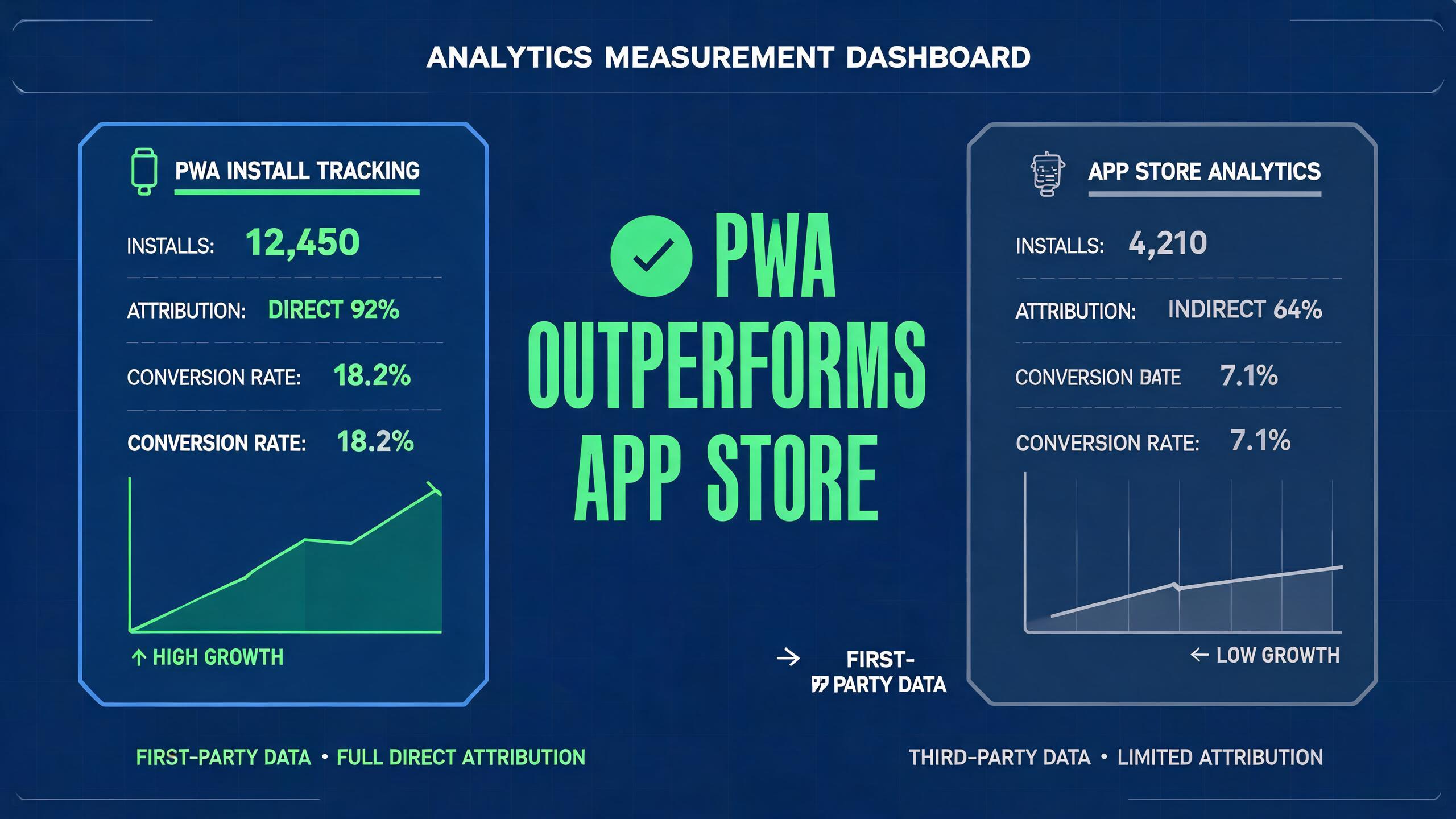
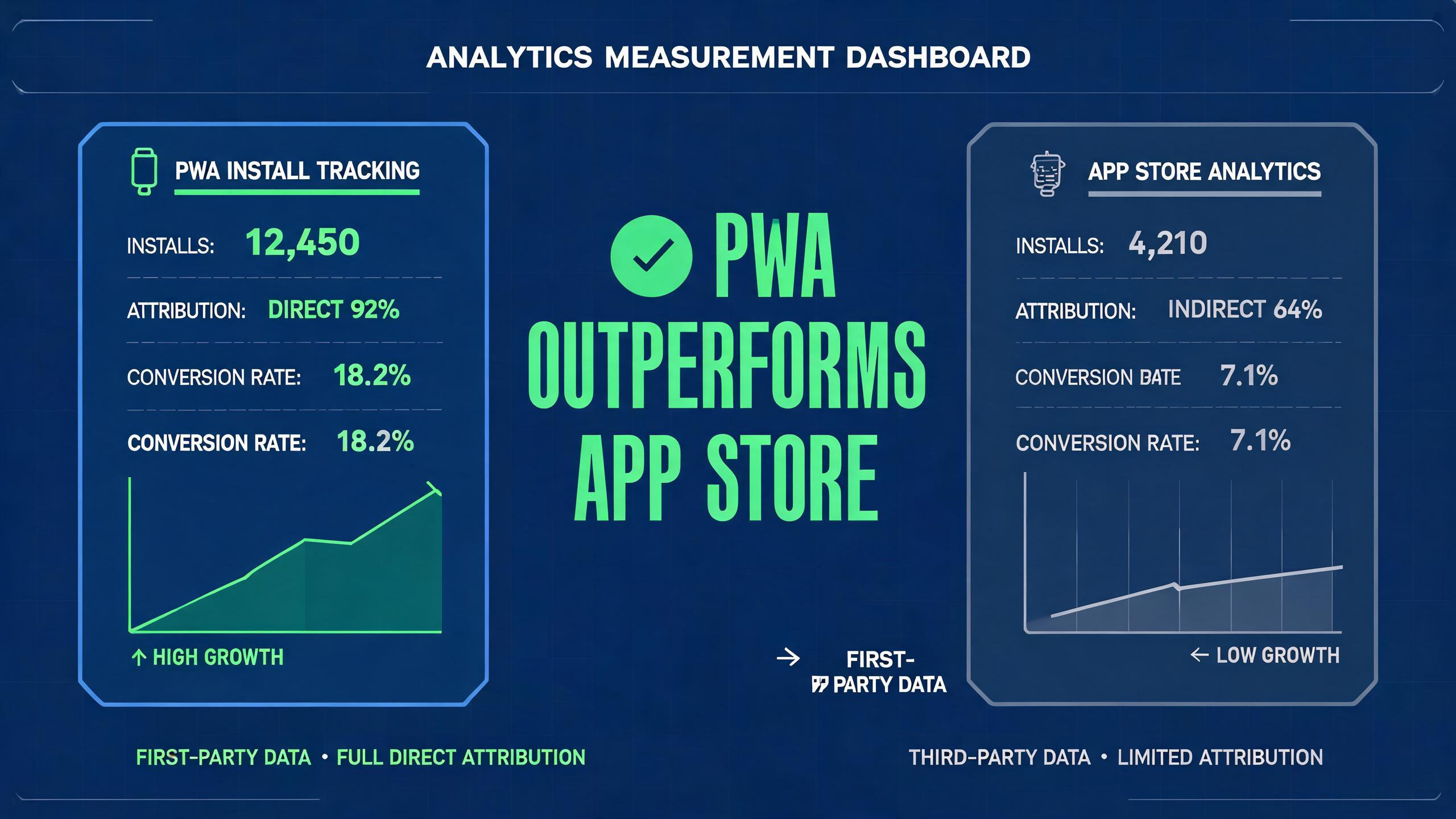
- Install conversion rates are typically 1.2x higher than Google Play because the install is instant — one tap on the “Add to Home Screen” prompt
- If Meta restricts your ad account, you can shift to Google Ads, TikTok Ads, or direct traffic — your distribution endpoint (the PWA) stays the same regardless of traffic source
No Revenue Share — Keep 100%
Google Play takes 30% of all in-app purchases. With PWA, payments go through your own processor and you keep 100%. For a game with $50K monthly IAP revenue, switching to PWA saves $15K/month — $180K/year — that can be reinvested into user acquisition and conversion optimization.
Real-World PWA Advantages When Platforms Crack Down
Consider a scenario many AI social app publishers face: Meta flags your ad creative for “misleading claims” (a common trigger for AI companion apps). Your ad account enters review, pausing all campaigns. With Google Play distribution, your entire UA pipeline stops — no ads running means no store listing traffic means no installs.
With PWA distribution, the impact is contained:
- Your PWA remains live and accessible via direct URL, organic search, and referral traffic
- Push notifications to existing users continue working — you can re-engage your installed base even with ads paused
- You can redirect ad budget to alternative platforms (Google Ads, TikTok, programmatic) immediately — the install endpoint doesn’t change
- Even users who have “uninstalled” (removed the home screen shortcut) can still receive push notifications through the browser
This resilience is why teams in high-risk categories are increasingly treating PWA as their primary distribution channel rather than a backup. The combination of no review risk, higher install conversion rates (1.2x), zero revenue share, and persistent push notifications creates a distribution model that is fundamentally more robust than app store dependency.
Action Steps: Evaluate Your Platform Dependency
- This week: Map your current UA dependency — what percentage of installs come through Google Play? What percentage of UA spend goes through Meta? If either number exceeds 70%, you have concentration risk.
- This month: Run a pilot PWA deployment alongside your existing Google Play app. Compare install conversion rates, Day 1 retention, and cost per install between the two channels.
- This quarter: If your category faces ad review or app store rejection risk, establish PWA as a parallel distribution channel. This provides insurance against platform policy changes while potentially improving your unit economics through higher conversion rates and zero commission.
The Meta ad review crackdown and Advantage+ controversy are not temporary disruptions — they represent the new normal of platform advertising. App publishers who diversify their distribution away from platform dependency will be better positioned to survive and thrive regardless of what Meta or Google decides next.
Skip the app store. Go live instantly, keep 100% of your revenue.
ROiBest helps Android app teams launch PWAs — no review process, no 30% Google Play cut, and push notifications that work even after uninstall. Teams see up to 1.2x higher install conversion rates vs native app downloads.

发表评论