


Measurement has become the defining competitive lever in mobile app advertising in 2026. As the industry shifts from last-click attribution to multi-touch, incrementality, and data-driven models, the quality of your install tracking data directly determines whether your campaigns can optimize or just spend. For Android app distribution teams, the comparison between Android PWA install tracking and Google Play download attribution is not academic — it’s the difference between a measurement setup that compounds over time and one that leaks signal at every step.
→ Want to bypass Google Play entirely? See how ROiBest PWA works — no submission, no cut, 1.2x installs.
The Measurement Problem With Google Play Installs
Google Play install attribution works through a referrer-based system: a campaign click sets a Google Play referrer parameter, the user downloads from the Play Store, and the referrer is reported back to your MMP (AppsFlyer, Adjust, Singular). This chain has four known failure points:
- Store-side latency: Play Store downloads are not instantaneous. Users who leave the app store during a slow download session are never captured as installs, even if they eventually complete the download hours later. Most MMPs count the attribution point as app open, not download start, meaning slow-network users are frequently misattributed.
- Cross-device and cross-session drops: If a user sees your ad on one device and downloads on another — common in households with multiple Android devices — the referrer chain breaks and the install is attributed to organic or unattributed.
- SKAdNetwork-equivalent fragmentation: Google Play is moving toward privacy-preserving attribution similar to Apple’s ATT, with Play Integrity API and restricted referrer access for non-consenting users. This creates a growing dark pool of installs visible in analytics but not attributable to campaigns.
- In-app event tracking delays: Events inside a Play-distributed native app depend on SDK integration. Every SDK update, OS version conflict, or permission change can break event firing without immediate alert. Silent tracking failures are endemic to native app measurement stacks.
How Android PWA Install Tracking Closes the Measurement Gap

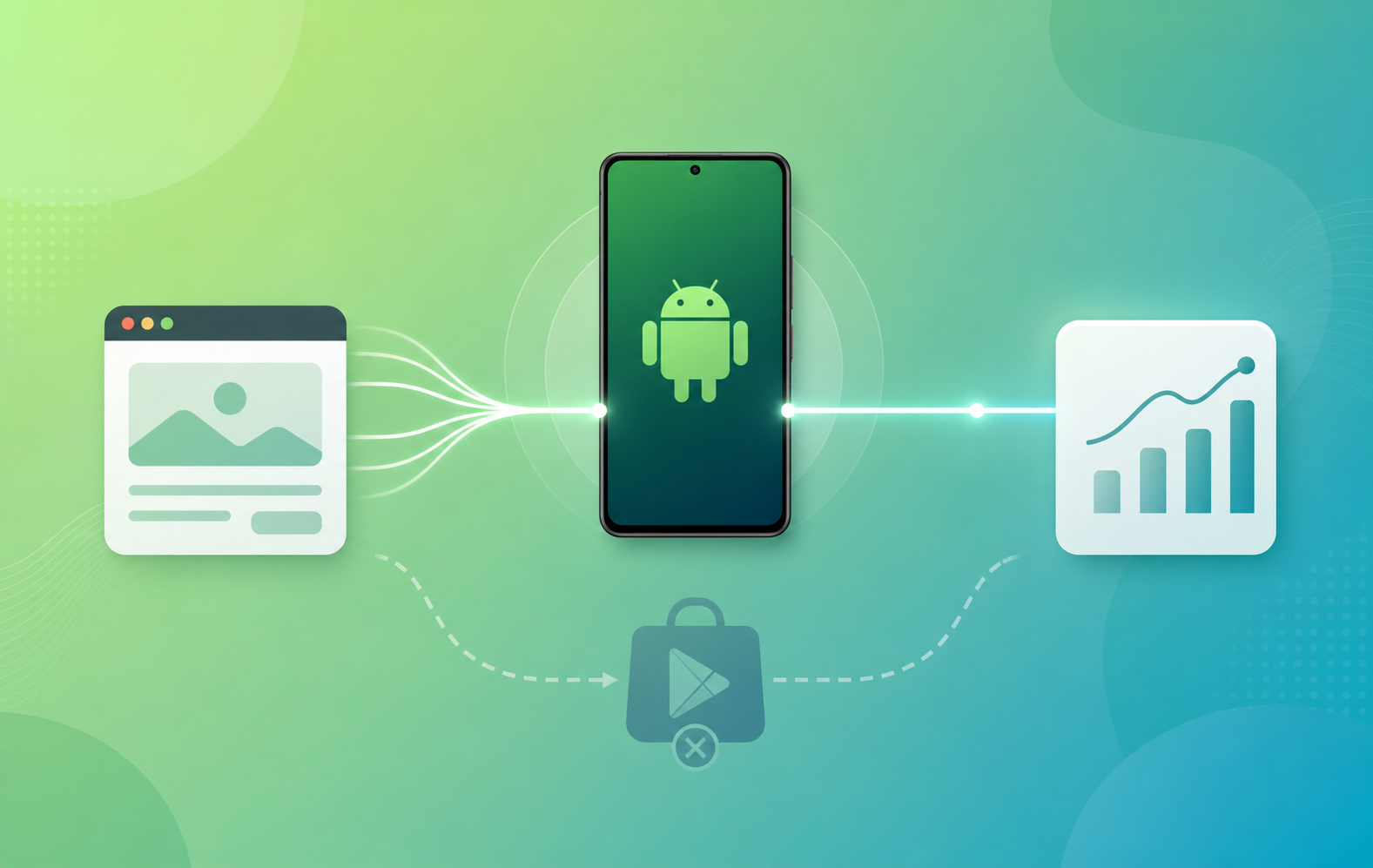
Android PWA distribution eliminates the Play Store middleman. The install event is a browser-initiated “Add to Home Screen” action — a web event that can be tracked with standard web analytics tools alongside or instead of MMP SDKs. This creates several structural measurement advantages:
Same-session install attribution
When a user arrives from a paid ad and installs your PWA, the entire journey — click → landing page → install prompt → install → first session — happens in a single browser session with a single UTM attribution chain. There is no store redirect, no referrer hand-off, no OS-layer intermediary. GA4 can capture the install event as a custom event (PWA_install) with full campaign, ad set, and creative attribution attached.
For teams running Google Ads UAC or PMAX campaigns, this means conversion events fire closer to the actual user action, with less latency degrading attribution accuracy. See our guide on Google Customer Match for PWA install campaigns for how first-party signals integrate with this flow.
No SDK dependency for core install signal
The PWA install event is captured at the browser layer, not the app layer. This means you don’t need an SDK update to maintain core install tracking — the signal is inherently stable across OS updates and app versions. For in-app events post-install, you can still use lightweight event tracking through service workers or browser-based analytics, but the foundational install attribution doesn’t depend on native SDK health.
Push notification attribution is first-party by default
One of the most powerful measurement advantages of Android PWA is push notification tracking. As detailed in our Android PWA push notification re-engagement guide, PWA push events are Web Push standard — they originate from your own service worker infrastructure, not a third-party push SDK. Every notification sent and every notification click is directly attributable in your own analytics without platform-side obfuscation.
This matters enormously for re-engagement campaign ROI. When a push notification re-activates a dormant user and they make a purchase, that conversion appears in your analytics with the push campaign tag. There’s no “organic” misattribution from third-party notification platforms losing the campaign context.
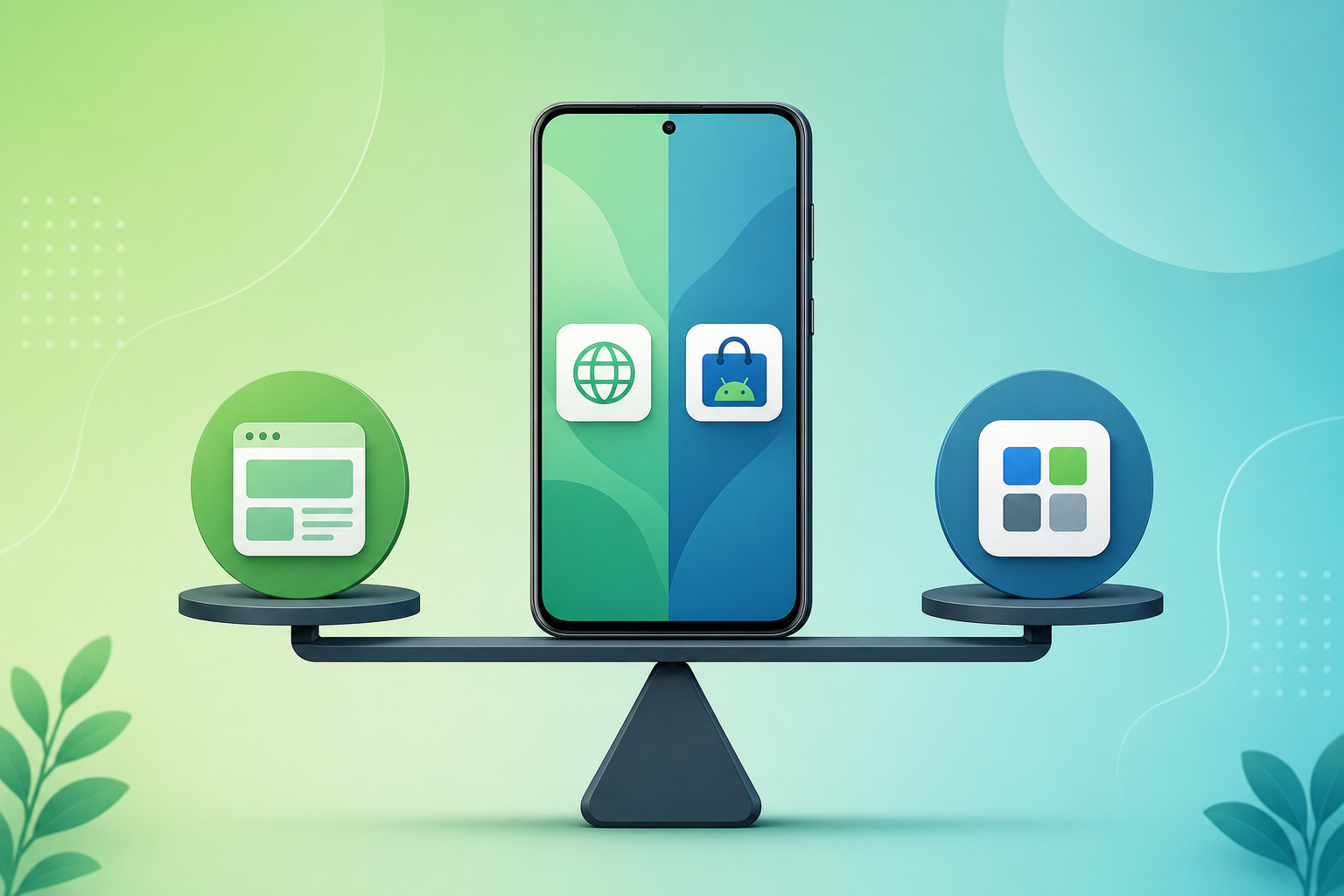
PWA vs Google Play: Install Tracking Comparison
| Measurement Dimension | Google Play Native App | Android PWA |
|---|---|---|
| Attribution method | Play referrer + MMP SDK | Browser UTM + GA4/custom events |
| Cross-device attribution | Limited (requires signed-in Google account) | Limited, but same-session attribution is complete |
| Install-to-event latency | High (SDK initialization + permission prompts) | Low (browser event fires immediately) |
| Privacy changes impact | High (Play Integrity, restricted referrers) | Moderate (standard web privacy rules apply) |
| Push notification attribution | Requires FCM SDK + MMP push integration | Web Push, first-party attribution by default |
| Silent tracking failures | Frequent (SDK conflicts, OS updates) | Rare (web standard events) |
| Time to implement | 2–4 weeks (SDK integration, store submission) | Immediate (web analytics already tracking) |
3 Steps to Improve Install Tracking With Android PWA
Step 1: Implement PWA install event tracking in GA4
Add a custom event listener to your PWA’s main JavaScript file that fires on the appinstalled browser event. Pass campaign UTM parameters from session storage to the event payload:
- Event name:
pwa_installed - Parameters:
utm_source,utm_medium,utm_campaign,utm_content,utm_term - Mark this event as a Conversion in GA4 for it to flow into Google Ads reporting
This creates a clean, attributable install conversion that feeds directly into PMAX and UAC campaign optimization.
Step 2: Set up push notification campaign attribution
Configure your service worker push notification handler to append campaign parameters to the URL opened when a user clicks a notification. Log the notification send event and the click event as separate GA4 events, enabling you to calculate push CTR and push-attributed conversions in your own reporting without relying on third-party push platform attribution.
Step 3: Build a measurement audit cadence
Schedule a monthly audit comparing:
- PWA install events (GA4) vs ad platform reported conversions (Google Ads, Meta)
- Push send events vs push click events (your service worker logs)
- Revenue events post-install (your backend) vs GA4 conversion values
The gaps between these three data sources tell you exactly where measurement is leaking. For PWA distributions, these gaps are typically far smaller than equivalent native app measurement stacks.
Why 2026 Is the Inflection Point for PWA Measurement
The 2026 Upfronts season put measurement at the center of every media buying conversation. Brands are demanding incrementality tests, clean attribution rooms, and first-party data integration at scales that were previously only discussed by enterprise teams. For performance advertisers running Android app distribution, PWA’s measurement architecture isn’t a technical nicety — it’s the foundation that makes it possible to answer “what is my true cost per install” without a layer of MMP interpolation.
As Google Play’s attribution environment tightens in response to privacy regulations, the measurement advantage of web-native PWA distribution compounds. For a full comparison of distribution architecture decisions, see our Android PWA vs Google Play 2026 Complete Guide.
Action Checklist: PWA Install Tracking in 2026
- ☑
appinstalledevent firing with full UTM payload in GA4 - ☑ Pwa_installed marked as Conversion in GA4 + imported into Google Ads
- ☑ Push notification send + click events logged in service worker
- ☑ Monthly GA4 vs ad platform vs backend revenue reconciliation
- ☑ UTM parameter persistence through install to first session
Skip the app store. Go live instantly, keep 100% of your revenue.
ROiBest helps Android app teams launch PWAs — no review process, no 30% Google Play cut, and push notifications that work even after uninstall. Teams see up to 1.2x higher install conversion rates vs native app downloads.

发表评论