


Google’s developer policy updates in 2026 have introduced a wave of new compliance requirements that are directly affecting how Android apps get distributed — and how quickly they get taken down. For overseas teams relying on Google Play as their primary install channel, these changes aren’t just administrative friction. They’re business risk. This guide breaks down the most impactful changes and explains why more teams are treating PWA distribution as a strategic complement — or replacement.
→ Want to bypass Google Play entirely? See how ROiBest PWA works — no submission, no cut, 1.2x installs.
What Changed in Google Play Developer Policy 2026
Google rolled out several major policy updates this year, with enforcement timelines staggered across Q1 and Q2. The three changes with the highest impact on overseas app teams:
1. Tightened AI and Social App Content Review
Apps in the dating, social networking, and AI companion categories now face enhanced content review, including automated scan requirements and human review triggers for apps targeting users under 25. Apps that previously sailed through review are now being flagged for “potential policy ambiguity” — a catch-all that’s led to a significant increase in suspension notices.
Teams operating AI social apps report that review cycles have lengthened from 3–7 days to 2–4 weeks in these categories, with higher rates of provisional suspensions while appeals are processed.
2. In-App Purchase Compliance Mandates
Google has expanded its billing policy enforcement, requiring all apps monetizing through virtual goods, subscriptions, or in-app purchases to route transactions exclusively through Google Play Billing (GPB). The 30% commission applies to all qualifying transactions. Apps detected using alternative payment systems face immediate delisting.
For BC game teams and AI app developers, this means no more alternative payment SDKs — even in markets where Google Pay penetration is low.
3. Target API Level Requirements Accelerated
Google has moved up the deadline requiring apps to target Android 14 (API level 34). New app submissions must comply immediately; existing apps have a grace period through mid-2026. Teams with legacy codebases are facing significant refactoring costs to meet this requirement or risk removal from Play entirely.
The Real Business Impact: 3 Scenarios Teams Are Navigating

These aren’t theoretical risks. Here’s what’s actually happening in the market:
- Suspended apps during peak campaign periods. A team running a BC game launch got their app suspended on day 2 of a major paid campaign — an appeal took 11 days to resolve. By then, the campaign budget was burned with no install destination. The cost: estimated $80K in wasted ad spend plus delayed revenue.
- Commission bleed on profitable SKUs. For a game with $500K monthly in-app revenue, the forced GPB routing means $150K going to Google — every month. Teams that built unit economics around alternative payment systems need to recalculate at every price point.
- Update delays breaking user experience. An API level 34 refactor that takes 2–3 months means months where the app can’t ship new features to Play Store users. For live-service games where content freshness drives retention, this is a compounding disadvantage.
Why PWA Distribution Has Become a Risk Hedge
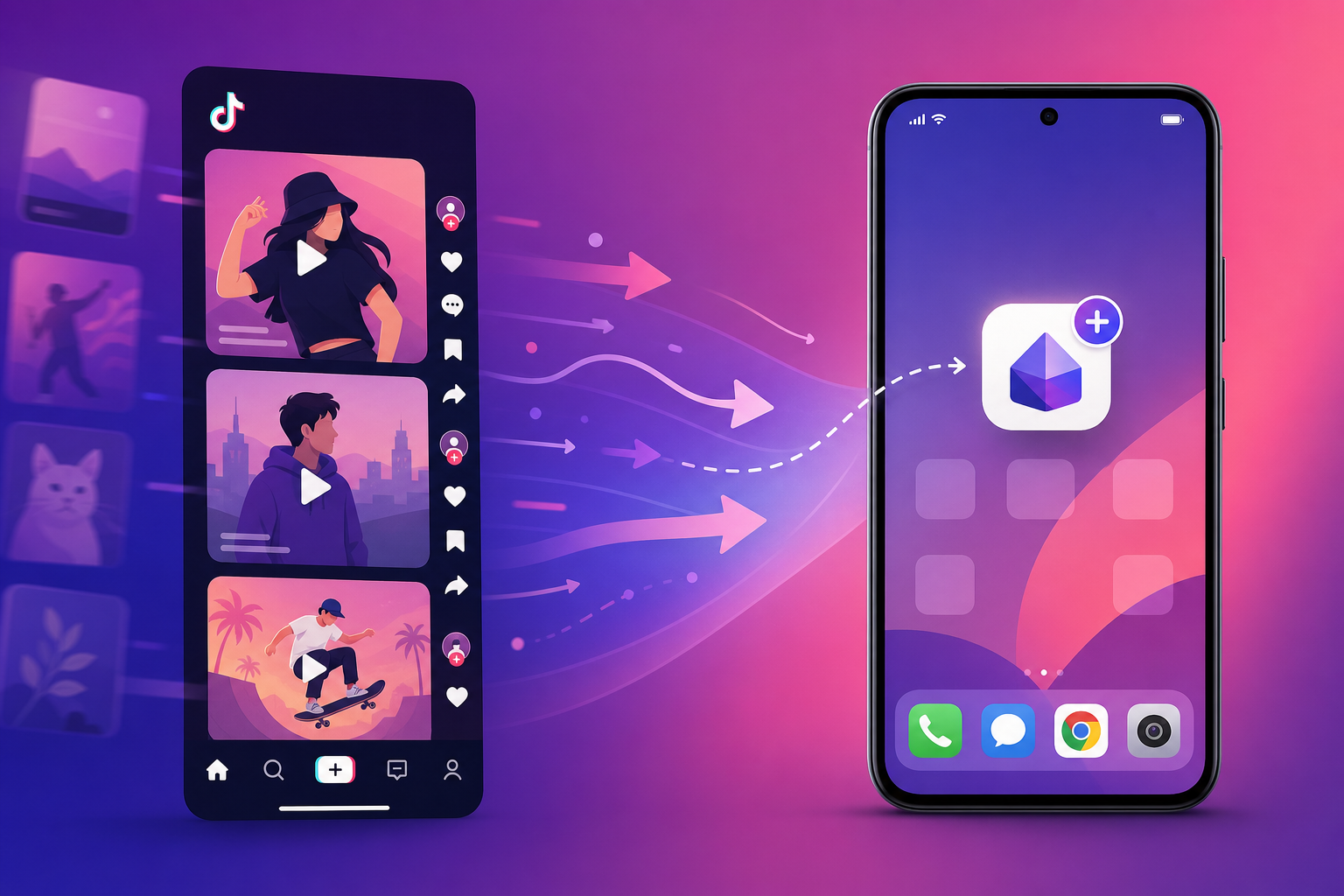
Progressive Web Apps run entirely outside of Google Play. That means: no review process, no risk of suspension, no mandatory billing commission, and no API level compliance pressure. The tradeoff has always been perceived as “lower quality install experience” — but that gap has largely closed.
Data from teams running parallel PWA and Play Store campaigns:
- Install conversion rate: PWA via paid traffic: 1.2x higher than native app install from Play Store landing page (same ad creative, same audience). Why: “Add to Home Screen” is faster than “Download from Play” for users on 4G.
- Retention at 7 days: Within 5–8% of native app retention for games; sometimes higher for AI social apps where the web experience is functionally identical to native.
- Push notification deliverability: PWA push (via Chrome) delivers after uninstall — a capability native apps completely lose once a user uninstalls.
Internal reference: Android PWA vs Google Play: Complete Distribution Guide 2026 — full comparison of distribution channels, cost structures, and use cases.
Step-by-Step: How Teams Are Responding to the 2026 Policy Changes
- Audit your risk exposure. Which apps are in high-scrutiny categories (AI, social, dating)? Which have alternative payment integrations that now need GPB migration? Which are behind on API level targets? Build a risk matrix with timelines.
- Establish a PWA parallel track. For any app with meaningful Google Play revenue, set up a PWA distribution path with an independent analytics stack. You want this live before you need it — not during an emergency suspension.
- Segment your paid traffic. Test directing 15–20% of Google/Meta paid traffic to your PWA landing page instead of the Play Store. Measure install rate and D7 retention. For most app categories, the data will surprise you.
- Plan for push coverage. If your current retention strategy relies on in-app notifications, map out how PWA push notifications would cover the same use cases. For games with push-driven re-engagement, this is often a direct replacement with added coverage (post-uninstall reach).
Internal reference: PWA Install Prompt Android: Best Practices to Boost Installs — how to maximize install conversion once traffic hits your PWA page.
Bottom Line on 2026 Policy Changes
Google Play’s policy tightening in 2026 isn’t reversing — it’s accelerating. For teams with significant paid acquisition budgets and high-risk app categories, the question isn’t whether to have a PWA backup plan. It’s how quickly you can stand one up before the next suspension event hits your business.
Skip the app store. Go live instantly, keep 100% of your revenue.
ROiBest helps Android app teams launch PWAs — no review process, no 30% Google Play cut, and push notifications that work even after uninstall. Teams see up to 1.2x higher install conversion rates vs native app downloads.

发表评论