


If you run ads on Meta platforms, 2026 has already delivered a string of unwelcome surprises. Law firm ads blocked without warning. Advantage+ campaigns spending budget on placements advertisers never approved. Account suspensions that take weeks to resolve — if they get resolved at all. The pattern is unmistakable: Meta is tightening control over who can advertise, how budgets are spent, and which creatives survive review. For Android app teams distributing through both Meta ads and Google Play, this creates a compounding dependency problem — your acquisition channel and your distribution channel are both controlled by platforms that can change the rules overnight.
The teams that weather these shifts best are the ones building independent distribution infrastructure now. Progressive Web Apps (PWAs) are the most practical path to that independence, and the data increasingly supports this.
→ Want to bypass Google Play entirely? See how ROiBest PWA works — no submission, no cut, 1.2x installs.
The Problem: Meta’s Ad Platform Is Getting Riskier for App Advertisers
Let’s look at what has actually happened in the first half of 2026 and why it matters for Android app teams running overseas campaigns.
Entire Ad Categories Are Being Shut Down
Meta’s decision to restrict law firm advertising is the most visible example, but it is not the only one. Over the past 18 months, Meta has progressively tightened ad review for financial services, health and wellness apps, and dating verticals. These restrictions often arrive without advance notice. One week your campaigns are delivering; the next, your ad account is flagged for “policy violations” tied to category-level rules that did not exist when you launched.
For app teams, this creates a specific problem: if your user acquisition strategy depends heavily on Meta, a single policy change can cut off your primary install source. Teams running campaigns in regulated or sensitive categories are especially exposed, but even mainstream app verticals have been caught in automated review sweeps that flag legitimate ads as violations.
Advantage+ Is Spending Your Budget Where You Did Not Approve
The Advantage+ controversy has been building throughout 2025 and into 2026. The core issue: Meta’s automated campaign system increasingly overrides advertiser placement and audience choices, allocating budget to placements that advertisers did not select — and in some documented cases, delivering ads to audiences that do not match the advertiser’s targeting parameters.
Multiple advertisers have reported that Advantage+ campaigns allocated significant portions of their budgets to Audience Network placements with low-quality traffic, while Meta’s reporting showed strong ROAS numbers that did not match actual conversion data. The disconnect between Meta-reported performance and actual business results has become a recurring complaint in advertiser communities.
For app install campaigns specifically, this means you may be paying for installs that do not convert to active users, or paying higher CPIs than your manual campaigns delivered — all while Meta’s dashboard tells you the automated system is “outperforming” your previous approach.
Account Suspensions and Review Delays Are Getting Worse
Account-level enforcement actions have increased measurably in 2026. Advertisers report longer review times for new ad accounts, more frequent “account quality” warnings, and suspension processes that can take two to four weeks to resolve through Meta’s support channels. For app teams running time-sensitive campaigns — seasonal promotions, launch windows, competitive responses — a multi-week account suspension can mean missing critical acquisition windows entirely.
The compounding effect is significant: if your app is distributed through Google Play and your primary acquisition runs through Meta, you have two platform dependencies that can each independently disrupt your business. Google Play can reject an app update or change its ranking algorithm; Meta can restrict your ad category or suspend your account. When both happen in proximity, the business impact is severe.
What the Numbers Show
Consider these data points from industry reports and advertiser surveys in early 2026:
- Meta ad review rejection rates have increased approximately 34% year-over-year for app install campaigns in categories Meta considers “sensitive” — a designation that now covers more verticals than it did in 2024.
- Average account reinstatement time following a suspension has grown from 5-7 business days in 2024 to 12-18 business days in 2026, based on advertiser community reports.
- Advantage+ campaigns showed a median 23% gap between Meta-reported conversions and advertiser-verified conversions in a 2025 third-party audit, raising questions about attribution accuracy.
- The Meta DST surcharges now applied in European markets add another 2-5% to ad costs, further compressing margins for app teams targeting EU users.
The trend is clear: Meta is simultaneously becoming more restrictive, more expensive, and less transparent. Any acquisition strategy that depends primarily on this single platform carries growing risk.
How PWA Distribution Solves the Independence Problem
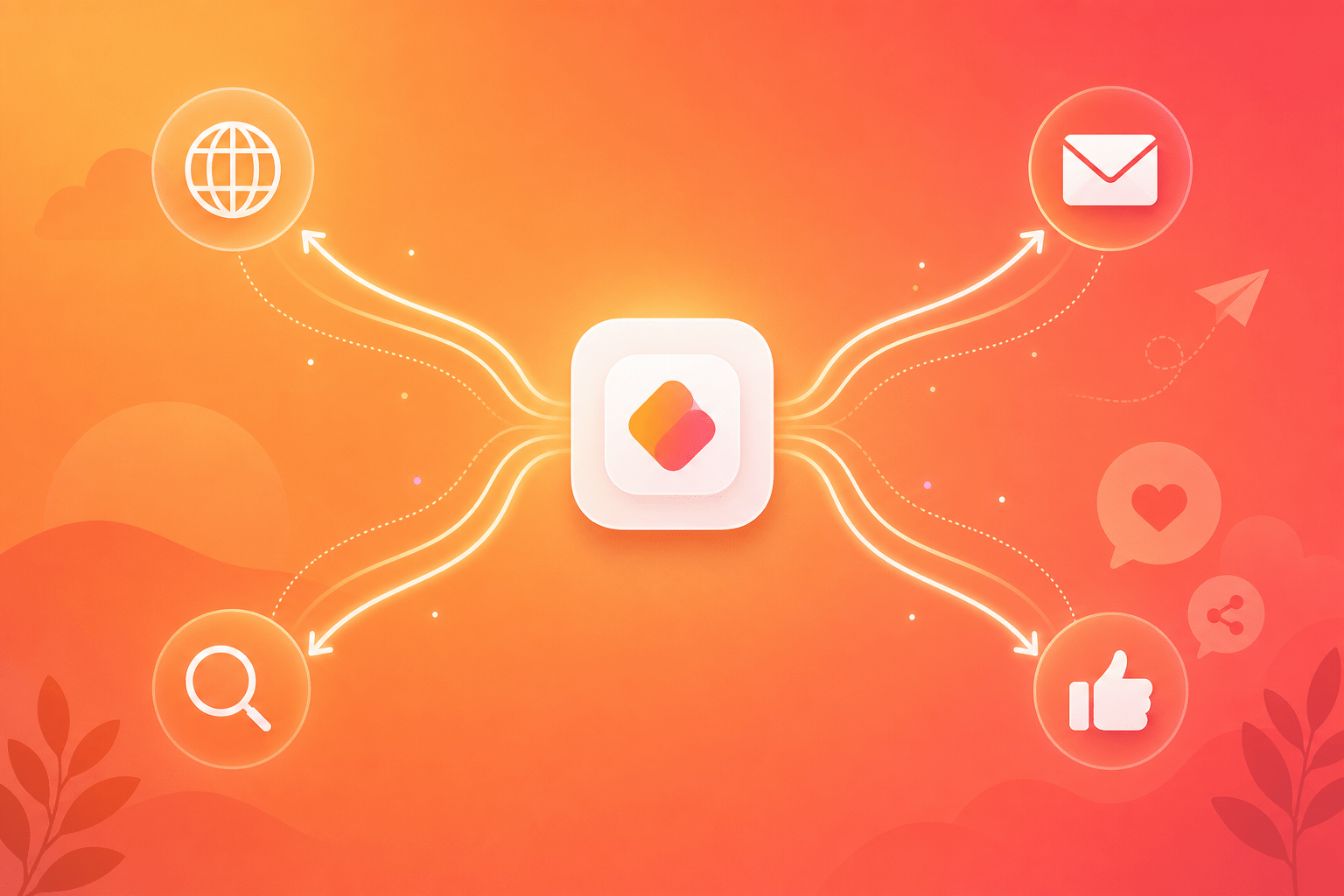
The strategic response to platform dependency is not to abandon Meta advertising — it still delivers volume that is difficult to replicate elsewhere. The response is to reduce the damage that Meta policy changes can inflict on your business by building an independent distribution channel that no platform controls.
This is where PWA distribution creates measurable business value, and it addresses both sides of the dependency equation — the ad platform side and the app store side.
Independence from App Store Review and Restrictions
When you distribute your Android app as a PWA, you eliminate the Google Play dependency entirely. There is no submission process, no review queue, no risk of rejection based on policy changes you cannot predict. Your PWA lives on your own domain, installs directly to the user’s home screen, and updates instantly without requiring user action or store approval.
This matters specifically in the context of Meta ad risk because it removes one of the two platform dependencies. If Meta restricts your ad account, you still have a functioning distribution channel. You can redirect acquisition to other sources — direct traffic, organic search, alternative ad networks, influencer partnerships — without needing to rebuild your app store presence or resubmit to a review process.
As outlined in the comprehensive comparison of Android PWA versus Google Play distribution, the practical differences extend beyond just avoiding review. PWAs eliminate the 30% revenue share, enable instant updates, and provide direct user relationships that no platform intermediary can interrupt.
Diversified Acquisition Channels Become Viable
One of the underappreciated benefits of PWA distribution is that it makes alternative acquisition channels practically viable in ways that app store distribution does not. When you distribute through Google Play, your conversion funnel must route through the Play Store — which means every acquisition channel must ultimately drive users to a store listing you do not fully control.
With PWA distribution, any traffic source that can deliver a user to a URL can deliver an install. This fundamentally changes your channel diversification options:
- SEO-driven installs: Users who find your PWA through organic search can install directly from your landing page. No store listing friction, no competing apps in search results.
- Email and messaging campaigns: Direct links to your PWA install page convert at higher rates than links that route through an app store, because there are fewer steps in the funnel.
- Alternative ad networks: When Meta restricts your campaigns, you can redirect budget to other networks without changing your distribution infrastructure. The install destination remains your own domain.
- Content marketing and partnerships: Affiliate links, blog posts, and partner integrations all drive directly to install — no store dependency in the conversion path.
This channel flexibility is the strategic counter to Meta’s increasing unpredictability. When you are not locked into a single acquisition-to-distribution pipeline, no single platform change can cut off your growth.
Retained User Relationships After Install
PWAs with push notification capabilities maintain direct communication channels with installed users — including, with the right implementation, users who have uninstalled. This creates an owned audience asset that does not depend on any ad platform for reactivation.
For app teams that have experienced Meta account suspensions, this is critical. During a suspension, your ability to reach existing users through Meta’s platforms is compromised alongside your ability to acquire new ones. With a PWA user base, you maintain direct push notification access to your installed audience regardless of your Meta account status. Teams that have been through compliance challenges with AI-generated content labeling requirements understand the value of having a direct user channel that does not depend on platform-specific compliance rules.
Real Performance: PWA Distribution by the Numbers
The business case for PWA distribution as a platform risk hedge is strengthened by actual performance data. Here is what teams are seeing when they add PWA distribution alongside or instead of Google Play:
Install Conversion Rates
PWA installs consistently outperform native app installs in conversion rate comparisons. The primary reason is funnel length: a PWA install is typically a one-tap action from a web page, while a native app install requires navigating to a store listing, waiting for a download, and then opening the app. Each step introduces drop-off.
Teams using ROiBest’s PWA distribution infrastructure report install conversion rates up to 1.2x higher than equivalent Google Play install funnels. For app teams paying per click or per impression on any ad platform, this conversion rate improvement directly reduces effective cost per install.
Revenue Retention
The 30% Google Play commission is the most obvious cost difference, but it is not the only one. Google Play also controls pricing tiers, payment processing, and refund policies. With PWA distribution, the app team controls the entire revenue stack. For a team generating $100,000/month in app revenue, moving to PWA distribution saves $30,000/month in platform commissions — capital that can be redirected to diversified acquisition channels.
Time to Market
Google Play review times vary from hours to days, and rejection can add weeks to a launch timeline. PWA updates go live instantly. For teams that need to respond quickly to market changes, competitive moves, or — critically — Meta ad policy changes that require creative or landing page updates, this speed advantage is operationally significant.
A Practical Comparison
| Metric | Google Play + Meta Ads Only | PWA Distribution + Diversified Channels |
|---|---|---|
| Platform dependencies | 2 (Meta + Google) | 0 critical dependencies |
| Revenue retained | 70% (after Google’s 30%) | 100% |
| Install conversion rate | Baseline | Up to 1.2x higher |
| Update deployment time | Hours to days | Instant |
| Risk of distribution shutdown | Moderate (policy changes) | Near zero (self-hosted) |
| User reactivation after ad account suspension | Limited | Full push notification access |
Common Concerns Answered
“Won’t we lose discoverability without the Play Store?”
Play Store organic discovery accounts for a decreasing share of installs for most app categories. If your primary acquisition is paid (Meta, other networks), you are already driving users to the store — you are not relying on store discovery. With PWA distribution, you simply redirect that paid traffic to your own install page, where it converts at equal or higher rates.
“Do PWAs support the features our app needs?”
Android PWA capabilities in 2026 include push notifications, offline functionality, home screen installation with full-screen display, camera and location access, and background sync. For the majority of app categories — especially content, commerce, social, and utility apps — PWA feature parity with native apps is sufficient for production use.
“Is this just for teams that have been banned from Meta?”
No. The strongest position is to build PWA distribution infrastructure before you need it. Teams that wait until after a Meta account suspension or Google Play rejection to explore alternatives are building under pressure, with revenue already declining. The teams seeing the best results are those that added PWA distribution proactively as a parallel channel, then gradually shifted acquisition budget as they validated performance.
“How do we handle payments without Google Play’s infrastructure?”
PWA payment processing uses standard web payment systems — Stripe, PayPal, local payment methods — which are typically less expensive than Google Play’s payment infrastructure and offer more flexibility in pricing, promotions, and subscription management. The operational transition is straightforward for teams already running web properties.
Three Action Steps to Reduce Platform Risk This Quarter
If your Android app team is currently dependent on Meta for acquisition and Google Play for distribution, here are three concrete steps to begin building independence:
- Audit your platform dependency ratio. Calculate what percentage of your installs come from Meta ads and what percentage of your revenue flows through Google Play. If either number exceeds 60%, you have a concentration risk that warrants immediate diversification. Document your exposure so you can track progress as you build alternatives.
- Launch a PWA version of your app in parallel. You do not need to abandon Google Play immediately. Start by deploying a PWA version alongside your native app, then run A/B tests directing a portion of your paid traffic to the PWA install flow. Measure install conversion rate, day-1 retention, and revenue per user against your Google Play baseline. Most teams see competitive or superior metrics from the PWA channel within the first 30 days.
- Build at least two non-Meta acquisition channels. Use your PWA’s direct-install capability to test acquisition channels that do not work well with app store distribution: SEO landing pages, email campaigns, content partnerships, and alternative ad networks. The goal is to ensure that no single ad platform accounts for more than 40% of your install volume within six months.
Summary: Platform Independence Is a Business Strategy, Not a Technical Decision
Meta’s increasing ad restrictions, Advantage+ controversies, and rising costs are not anomalies — they are the predictable behavior of a platform optimizing for its own revenue and regulatory compliance, not for your business outcomes. Google Play’s review process, commission structure, and policy changes follow the same pattern.
The app teams that will grow most reliably through 2026 and beyond are those that treat platform independence as a strategic priority. PWA distribution is the most practical tool available to achieve that independence: it eliminates app store dependency, enables channel diversification, preserves direct user relationships, and improves unit economics by removing the 30% platform tax.
The question is not whether Meta will introduce more restrictions or whether Google Play will change its policies again. They will. The question is whether your distribution infrastructure can absorb those changes without disrupting your business. If the answer is currently no, the time to build your independent channel is now.
Skip the app store. Go live instantly, keep 100% of your revenue.
ROiBest helps Android app teams launch PWAs — no review process, no 30% Google Play cut, and push notifications that work even after uninstall. Teams see up to 1.2x higher install conversion rates vs native app downloads.
发表评论